Google AI calls local businesses, including repair shops, to ask about prices and availability on a driver’s behalf. That makes a familiar part of shop marketing more important: can someone find accurate information about your business, reach you, and get a useful answer?
If your shop is missing from the first few map results, has an outdated phone number, or lets the call ring out, the opportunity can move to another shop without you knowing it happened.
For independent auto repair, collision, tire and brake, diesel and truck, RV, and other vehicle repair shops, the practical response is the same. Get the basics right before the call comes.
How Google AI Calls Work for Quotes
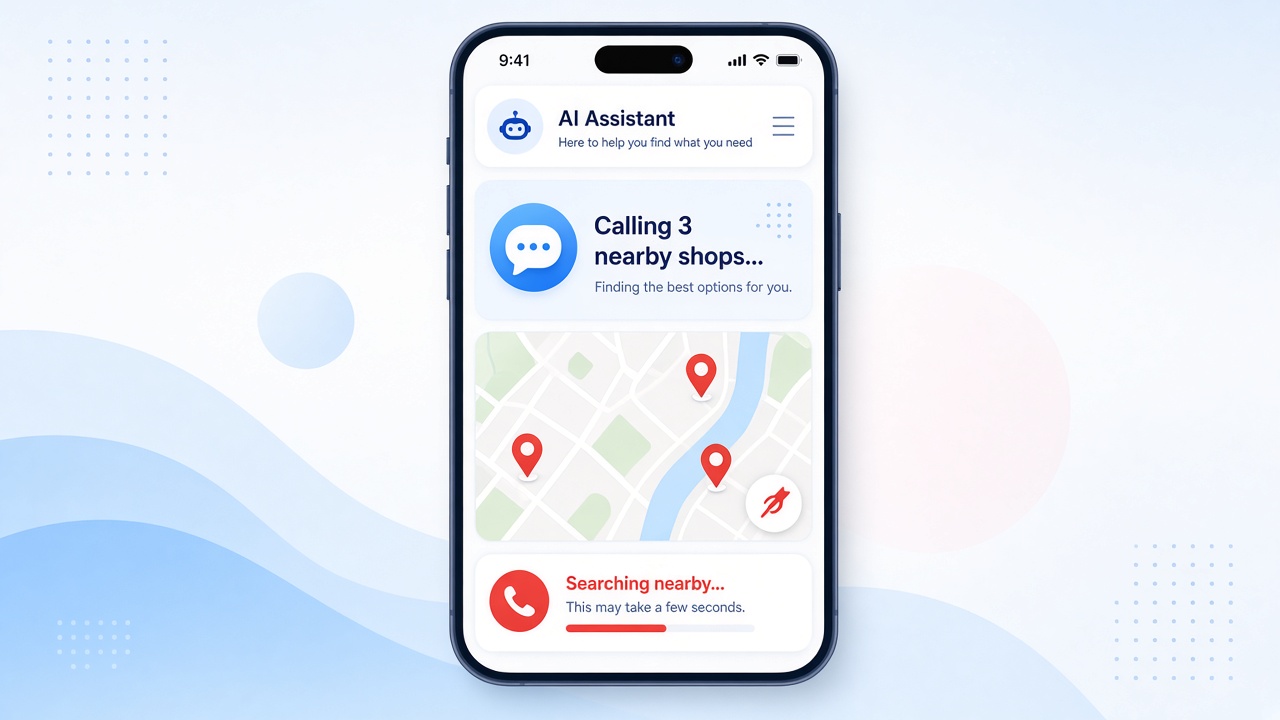
Where the feature is available, a driver searching on Google can choose an option that asks AI to get prices. Google AI calls shops near the top of the results, asks about price and availability, and reports the information back to the driver.
It contacts a handful of shops, not every business on the list. If nobody answers, it simply moves on.
That creates two separate challenges. Your shop needs to be visible enough to be considered, and it needs to be ready to handle the inquiry. Being listed is not the same as being reachable. Being reachable is not the same as giving the caller something useful.
The uncomfortable part is that a missed opportunity may leave no clear trail. The driver may never hear your shop’s name. You may never learn that another business supplied the quote instead.
The goal is not to build a complicated AI strategy. It is to make sure your shop can complete a basic customer conversation. Four areas deserve your attention: your Google Business Profile, phone coverage, service information, and recent reviews.
1. Make Your Google Business Profile Accurate
Your Google Business Profile needs to reflect the shop you operate today. Start with your business name, hours, services, and phone number.
The phone number is especially important. When Google AI calls, it dials the number listed. If that number is old or goes somewhere nobody answers, a correct listing elsewhere will not fix that particular call.
Do not check the information from memory. Open the profile and read what is actually there. Owners and managers know their business so well that it is easy to overlook information that no longer matches daily operations.
- Name: Is the business identified correctly?
- Hours: Do the listed hours match when your shop is open?
- Services: Does the profile accurately describe the work you handle?
- Phone number: Does the listed number reach the right shop line?
For a specialized repair business, the service information matters just as much as the business name. A customer should not have to guess whether you handle the vehicle or repair they need. Make the work you do clear rather than assuming a broad shop label explains everything.
If you need help accessing or managing the listing, Google’s Business Profile Help Center is a useful starting point.
Accuracy is not a one-time marketing task. Treat the profile as information your front counter depends on. When the shop’s details change, the public information needs attention too.
2. Make Sure Somebody Answers
A working phone does not necessarily mean you have working phone coverage.
Picture an owner under a truck while the front counter line rings. The owner is doing necessary work. The phone is operating normally. But nobody is available to answer, so the AI hangs up and calls the next shop.
This is where shop operations and repair shop marketing meet. You can put effort into your online presence and still lose the inquiry at the point of contact.
Ask who is responsible for answering, not just where the phone is located. If the answer is “whoever hears it,” take a closer look at what happens during a busy stretch.
A practical review should cover the situations your team already faces:
- Who answers when the owner or manager is in the bays?
- What happens when the front counter is helping another customer?
- Does the line ring without anyone taking responsibility for it?
- If a call reaches voicemail, does someone actually check it?
You do not need to assume that your current setup is broken. You do need to test it. Calling your own shop from your cell phone gives you a better answer than asking whether the phone “usually gets answered.”
Listen from the caller’s side. The experience you hear is the experience your marketing is sending people into.
3. Give a Clear Answer About Services, Pricing, and Availability
The AI needs information it can take back to the driver. That means your shop should be able to explain what repairs it handles, provide ballpark pricing where appropriate, and say how soon a vehicle can get in.
A vague answer leaves little to report. A clear answer gives the driver a practical basis for considering your shop.
Start with these three questions:
- Can you handle the requested work? Make your repair services clear.
- What does that work roughly cost? Provide a ballpark range when you can responsibly do so.
- How soon can the vehicle come in? Explain your current availability.
The word “ballpark” matters. You do not have to pretend every repair can be priced precisely before the vehicle arrives. The point is to give useful information without presenting an estimate as a confirmed final price.
If you cannot give a firm price yet, explain that plainly. Do not leave the caller trying to work out whether you offer the service at all. Separate what you can answer now from what requires a closer look at the vehicle.
The same applies to availability. Saying you handle a repair is only part of the answer. The driver also needs to know whether you can get the vehicle in soon enough for their situation.
Make sure the person answering the phone has access to the information needed for that conversation. A clear service list does little good if the front counter cannot explain it. Pricing guidance is not helpful if nobody knows what can reasonably be shared.
Useful information beats a polished but empty response. Focus on giving an accurate, understandable answer to the questions being asked.
4. Keep Fresh Reviews Coming In
Recent reviews from real customers can help your shop stand out among the businesses a driver, or an AI, is weighing. Reviews from five years ago say less about your shop today than fresh feedback does.
That does not mean older reviews are worthless. It means you should not treat a collection of past reviews as something that never needs attention again.
Look at the dates on your last few reviews. Are customers describing recent experiences, or has the feedback gone quiet?
A shop can be busy doing good work while its public review activity stands still. Owners see the vehicles moving through the bays and the customers returning to the counter. Someone finding the business online does not have that same inside perspective.
The practical priority is a steady flow of genuine feedback from actual customers. Keep reviews on your list of regular marketing responsibilities rather than revisiting them only when you notice a problem.
Keep the promise realistic, too. Fresh reviews are part of being prepared and visible. They are not a guarantee that your shop will reach a particular position or receive an AI call.
A Ten-Minute Check You Can Do Today
You do not have to solve every marketing issue to find the most obvious gaps. Start with the same path a caller would use: your public information, your phone line, and your recent customer feedback.
Open Your Google Business Profile
Check the phone number, hours, and services. Read each item rather than scanning past it. Ask whether someone unfamiliar with your business would understand what you do and how to contact you.
If something is wrong, note the correction. An inaccurate number is a direct obstacle to the call reaching your team.
Call Your Own Shop Line
Use your cell phone and dial the number shown on the profile. Listen to what a customer hears.
Does someone answer? Does the line ring out? Does it lead to voicemail that nobody checks? Follow the experience far enough to understand where the conversation stops.
If the test exposes a coverage problem, address that problem directly. A better profile cannot compensate for a phone that remains unanswered.
Check the Dates on Your Latest Reviews
Look at your last few reviews and see how old they are. The purpose is not to admire the total. It is to understand whether fresh customer feedback is still coming in.
Finish the check with a short list of gaps and a person responsible for each one. Keep it practical: correct the information, improve the answering process, clarify the service answers, or give recent reviews more consistent attention.
Readiness Is Not a Ranking Guarantee
None of these steps promises a ranking or guarantees calls.
You cannot control every decision Google makes or which shop a driver ultimately chooses. You can control the information you publish, whether your line gets answered, and whether your team can explain services, approximate costs, and availability.
Those are worth fixing regardless of who places the call. The basics that help an AI collect a useful answer also make your shop easier for a customer to contact and understand.
Key Takeaways
- Keep your Google Business Profile accurate, especially your phone number, hours, and repair services.
- Test your phone coverage instead of assuming incoming calls get answered.
- Provide clear service information, responsible ballpark pricing, and current availability.
- Keep genuine, recent customer reviews coming in without expecting guaranteed rankings or calls.
Want a second set of eyes on your shop’s setup? Request a free marketing analysis at americasbestshops.com. We’ll look at what you have in place and show you the gaps.

Brad Killgore is a Best Selling Author, Speaker, Military Veteran, and Strategic Marketing Expert with over 18 years of experience in the industry. Brad loves to spend time with his family and 3 grandchildren. He is an avid traveler who previously lived full-time with his wife in their luxury RV for 3 years. He has worked on some of the biggest concert stages in the world and met some of the most famous Rock Stars on the planet. Brad is a car and motorcycle enthusiast who has attended thousands of concerts over the last 45 years. Brad has been featured on top media outlets for his outstanding marketing results for America’s Best Shops. Brad is a Trailblazer in the world of AI strategy and automation.