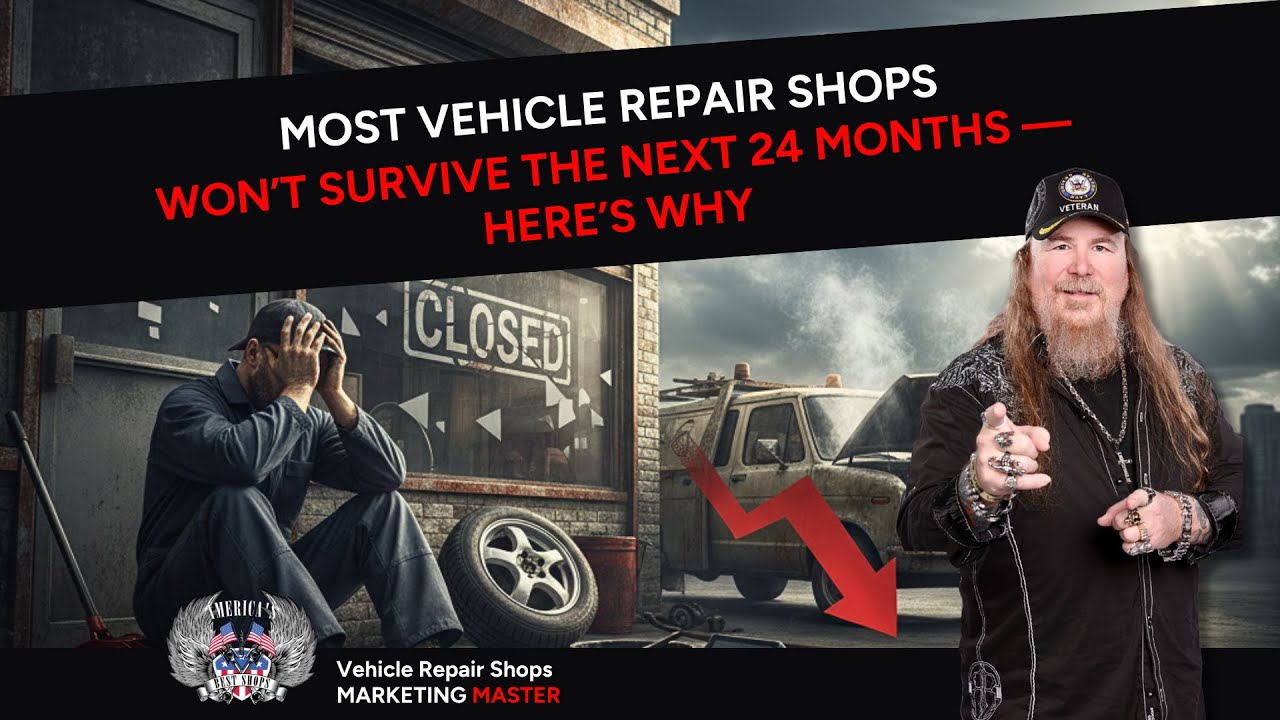
Most Repair Shops Won’t Survive The Next 24 Months | Here’s Why
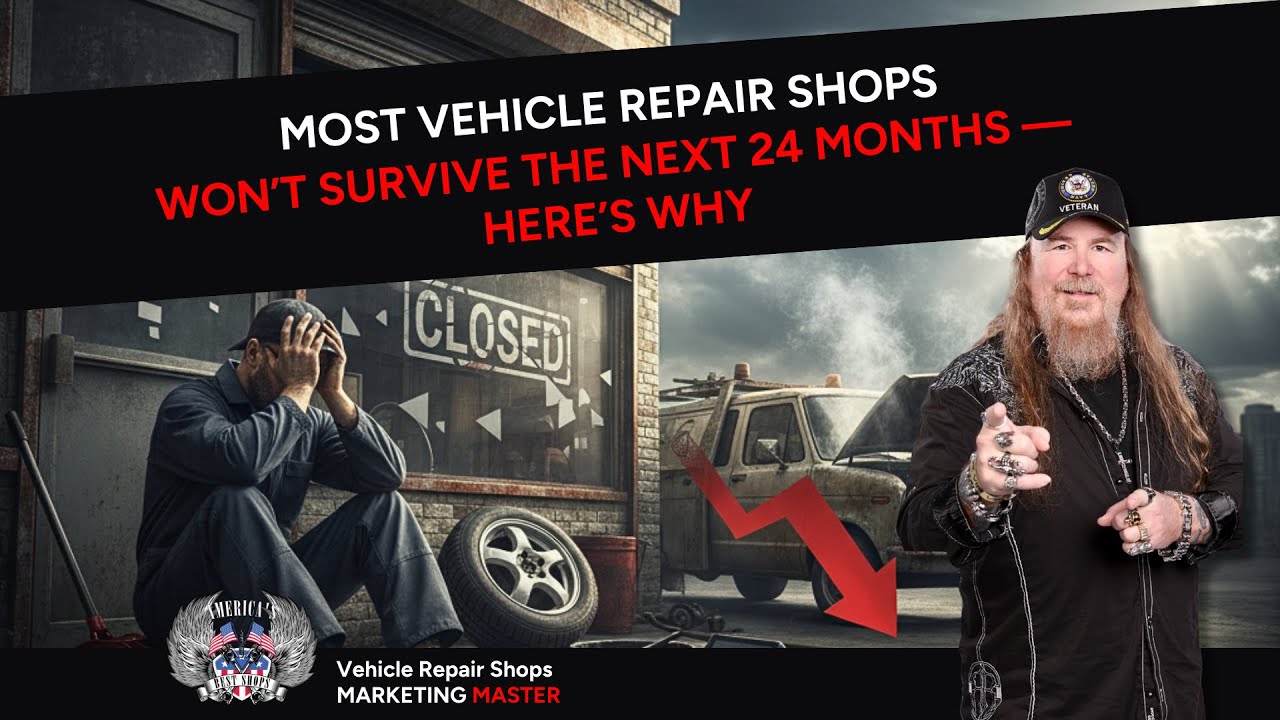
There’s a blunt reality confronting shop owners right now: repair shops won’t survive unless they shift how they attract, serve, and retain customers. This isn’t a scare slogan. It’s a description of the market forces, technology changes, and consumer behavior that are already reshaping which shops thrive and which disappear.
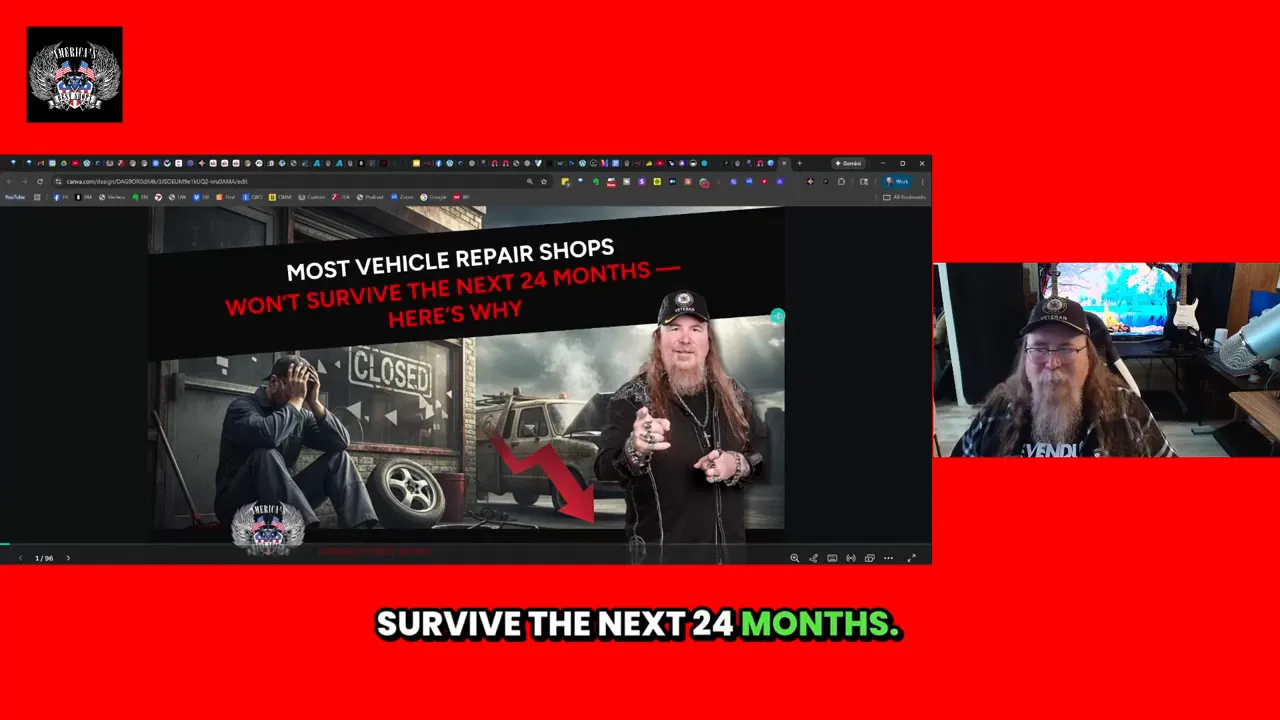
Table of Contents
- The hard truth: Why repair shops won’t survive unless they change
- What changed: economics and AI are rewriting the rules
- Market split: two markets, two approaches
- Being online is not enough
- Omniresence: own the places customers look
- Website hub checklist: what a modern hub must include
- Conversion science: get more out of the traffic you already have
- The biggest profit leak: missed and mishandled inquiries
- Define goals and KPIs: the difference between panic and preparation
- Know your ideal customer avatar
- Lead generation and lead nurturing: both matter
- Human in the loop: automation plus real relationships
- Three high-impact shifts to implement now
- Common objections and how prepared owners respond
- A simple 90-day execution plan
- Measure the right things
- Content and video: the trust multiplier
- Checklist: actions to take this week
- How immediate is “immediate” when responding to a lead?
- Do I need expensive tools to stop the missed-call problem?
- Is SEO still important if people use voice and AI assistants?
- How many follow-up touches are necessary before a prospect books?
- Can smaller independent shops compete with franchises and aggregators?
- Final note: commit to one big shift
The hard truth: Why repair shops won’t survive unless they change
If your shop’s marketing is a “set it and forget it” business card online, your competitors and new technology will quietly take your customers. The phrase repair shops won’t survive is accurate for those who mistake “being online” for “being visible, trusted, and easy to do business with.”
Here’s what’s happening:
- Customer behavior has changed. People are using voice, AI assistants, and summarizing search tools. They are asking questions, not typing long search queries.
- Visibility is collapsing. Search engines and AI no longer return long lists equally. They recommend fewer, more trusted results — which means many shops don’t get shown.
- Competition has shifted. Discount shops and price-driven competitors target squeezed middle-market customers, while premium buyers seek trust and convenience.
- Missed inquiries are expensive. The biggest profit leak most shops have is missed calls and slow follow-up. When that happens, these leads go elsewhere quickly.
What changed: economics and AI are rewriting the rules
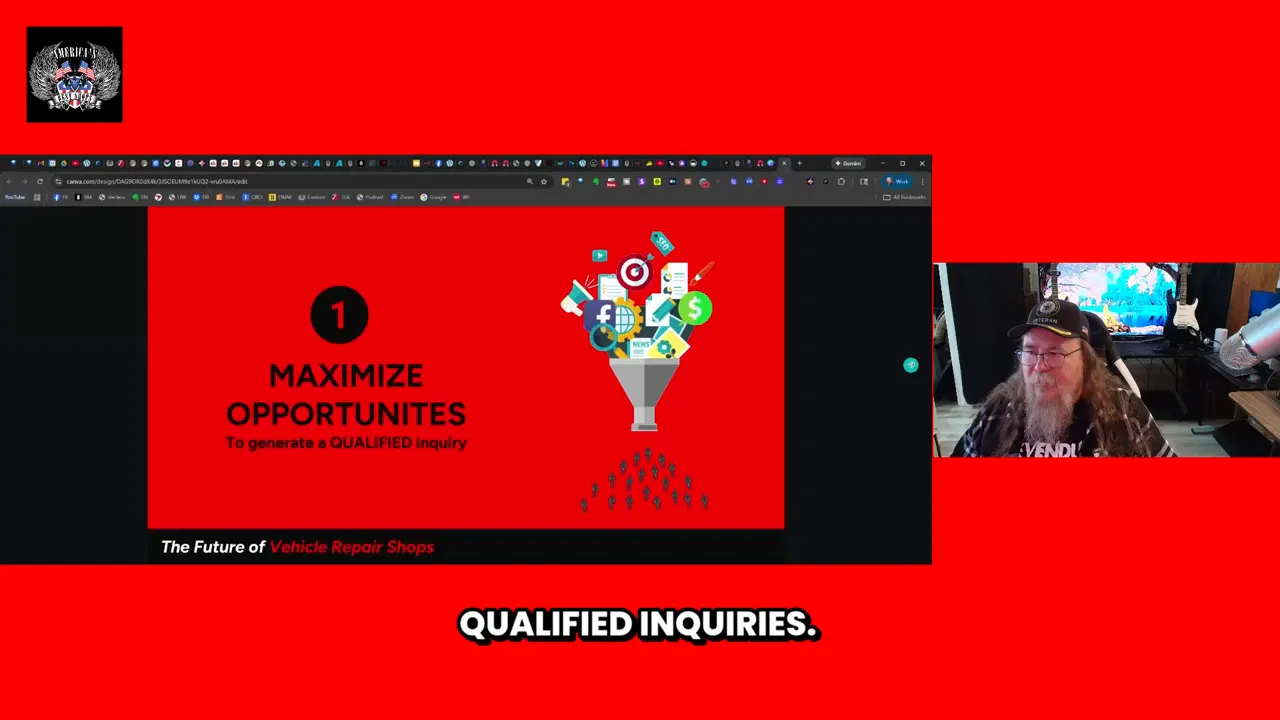
Two trends combined are driving the claim that repair shops won’t survive: economic pressure on middle-income households and rapid advances in AI-driven search and automation.
On the economic side, many customers have less discretionary income than five years ago. They defer repairs, shop strictly for price, and are more likely to choose quick, low-cost fixes — or put off service entirely. Meanwhile, a smaller but wealthier segment spends on premium service and expects convenience, transparent pricing, and strong guarantees.
Technically, AI is changing discovery. People rely on AI summaries, voice assistants in cars and homes, and platforms that favor trusted, well-documented businesses. Simply having a website and a few reviews will not cut it. Shops that fail to adapt will find fewer prospective customers can even see them, which is why repair shops won’t survive if they ignore how AI reads and ranks businesses.
Market split: two markets, two approaches
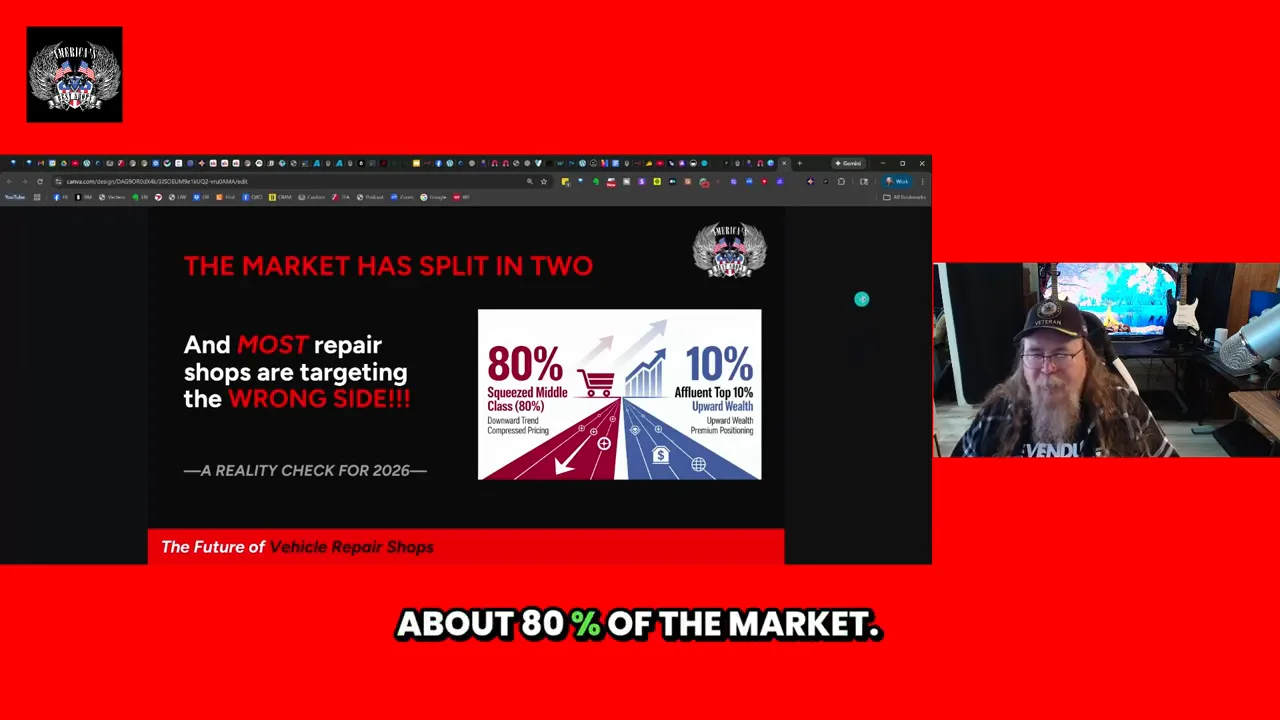
The market has split into two meaningful groups:
- Price-sensitive majority — often the squeezed middle. They shop aggressively for the lowest price and delay nonessential repairs.
- Quality-focused minority — affluent or upwardly mobile customers who prioritize trust, convenience, and workmanship over price.
Most shops unintentionally chase the first group, competing on price. Competing on price is a race to the bottom; it’s why repair shops won’t survive when many players fight over fewer customers. The better move: position your shop to attract the quality-first customers who will pay more, come back, and refer others.
Where to focus
- Target owners who value consistent communication, clear pricing, and long-term relationships.
- Showcase trust markers: warranties, certifications, reviews, and real team photos.
- Make it easy to do business with you: mobile booking, chat, click-to-call, and quick follow-up.
Being online is not enough
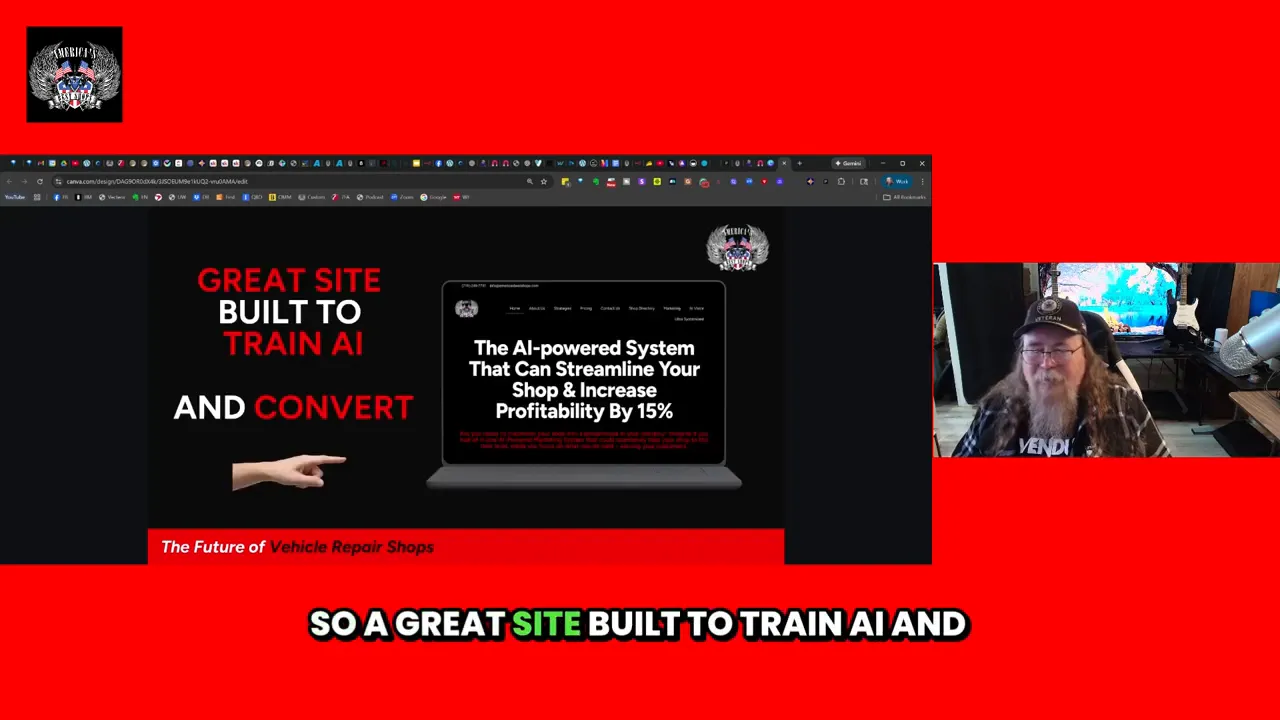
Many shop owners ask: if clicks are down and searches are changing, why bother with a website? Because the modern website is the nerve center — the hub that tells AI and humans who you are, where you are, and why they should choose you. If you don’t treat your website as your marketing hub, one of the reasons repair shops won’t survive will be self-inflicted invisibility.
A high-performance hub does four things:
- Communicates trust through reviews, warranties, certifications, and clear contact info.
- Converts efficiently with strong calls-to-action, click-to-call, chat, and booking options.
- Feeds AI and search with useful FAQ content, service pages, and structured business information.
- Integrates with automation so leads are captured, nurtured, and scheduled immediately.
Omniresence: own the places customers look
“Omniresence” means being consistently visible across the channels customers use — maps, search results, voice assistants, social platforms, local directories, and more. This is not scattershot marketing. It’s a system that maximizes brand impressions and increases the chance your shop is the one recommended by AI and humans alike.
When shops ignore omniresence, repair shops won’t survive the referral and discovery shifts that favor repeat, trusted names. When you own the touchpoints, you earn AI signals that make you more likely to be recommended.
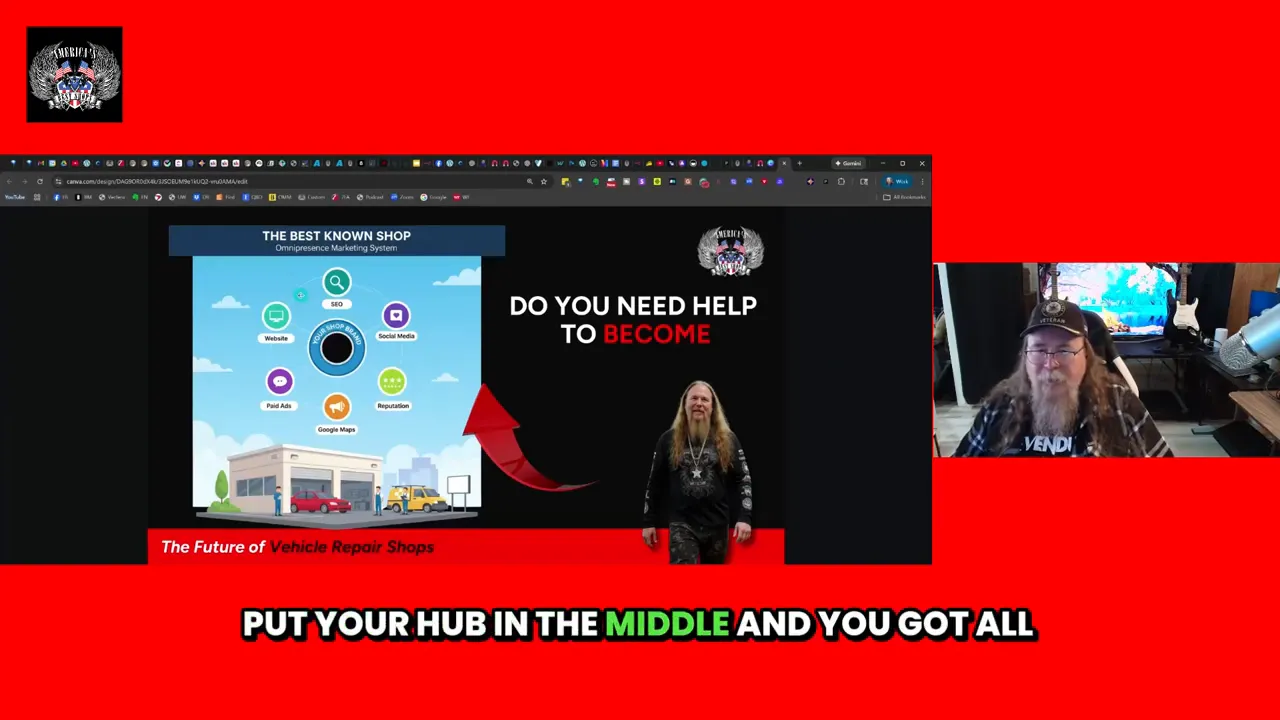
Key omniresence channels
- Google Business Profile and Maps — photos, reviews, accurate hours, and messaging.
- SEO + AI-ready content — service pages, city pages, and FAQs written to answer real questions.
- Paid ads — targeted Google and social ads for deliberate outreach.
- Social and video — short shop tours, before/after, and team stories build real human proof.
- Email and SMS — proactive reminders for maintenance and scheduled follow-ups.
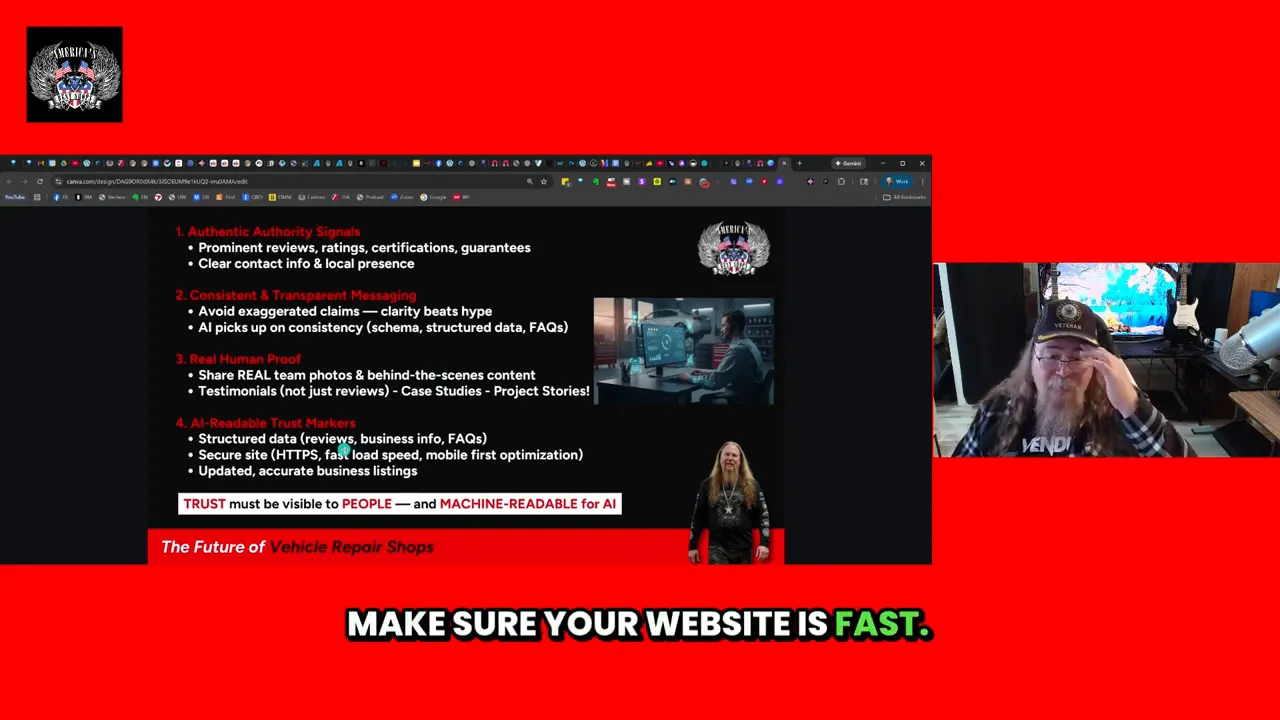
Website hub checklist: what a modern hub must include
Convert more visitors without spending more on traffic by optimizing the conversion path.
- Mobile-first design with prominent click-to-call and click-to-text.
- Real team and shop photos plus short explanatory videos and a shop tour.
- FAQs for every service so AI and humans find clear answers quickly.
- Visible reviews and trust badges that reduce hesitation.
- Secure, fast pages with HTTPS and fast load times.
- Chatbot or live chat for instant answers and immediate lead capture.
Conversion science: get more out of the traffic you already have
Most shops can double inquiries without increasing traffic by improving conversion. Conversion science is not magic. It is tightly focused optimization on trust signals, the visitor experience, and responder speed.
Use these tactics to increase conversion:
- Prominent reviews and guarantees to reduce risk perception.
- Clear, singular CTAs — make the next step obvious (call, text, book).
- Emotionally smart copy highlighting convenience, transparency, and protection for families.
- AI-powered tests to identify which page elements increase bookings.
- Personalization that tailors messaging in real time to a visitor’s intent.
One line that matters: conversion science equals doubling inquiries without more traffic. If you focus on the hub, the numbers follow.
The biggest profit leak: missed and mishandled inquiries
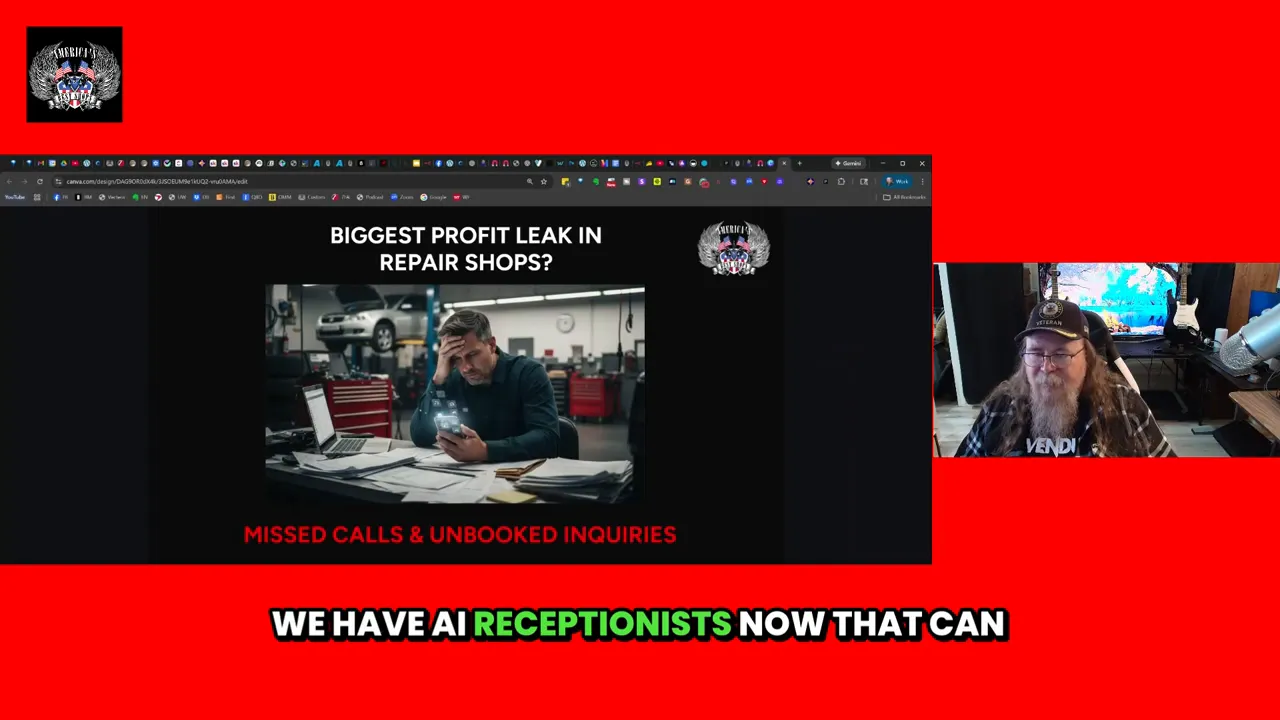
Hands down, the most common, fixable reason repair shops won’t survive is missed and mishandled inquiries. When phones go to voicemail, web forms go unanswered, or after-hour leads are ignored, those opportunities are lost permanently in many cases.
Real customers have short attention spans. If your shop does not respond within minutes, they call the next shop on the list.
How prepared owners stop the leak
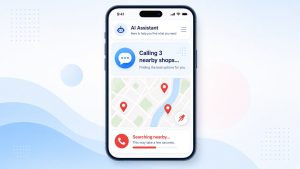
- Set up AI reception and automation that answers missed calls, sends booking links, and routes high-priority leads to a human.
- Automate multi-touch follow-up so prospects receive texts and emails 5 to 7 times if necessary.
- Use live chat and video chat to convert chat-savvy customers quickly.
- Implement callback and scheduling links within the first minute for web and map leads.
Leads that aren’t contacted in the first two to five minutes go cold. That small window is where the biggest improvement and most of the low-hanging revenue live.
Define goals and KPIs: the difference between panic and preparation
Repair shops won’t survive if marketing remains a guessing game. Owners who succeed treat marketing like a measurable system with goals, targets, and KPIs.
Start with these steps:
- Set your revenue target for the year. Convert that into monthly targets and then into the number of jobs required.
- Calculate your average job value and how many inquiries you need based on your conversion rate.
- Track KPIs such as inquiry-to-book rate, missed calls, response time, website conversion rate, and ROI by channel.
There’s a reason goal-setting works. A Harvard study often referenced shows that a tiny percentage of grads with written goals outperformed the rest dramatically. Turn goals into written, measurable plans — otherwise your best efforts to avoid the fate that repair shops won’t survive will be random and reactive.
Success is goals. All else is commentary.
Know your ideal customer avatar
Marketing without a clear ideal customer is like trying to fix a car with a blindfold on. Who are you trying to attract? The better you can picture the person, the more effective your messaging and media choices will be.
Example avatar summary:
- Age: 30 to 65
- Profile: Busy working professional or parent, household decision maker
- Value: Convenience, time savings, transparent pricing
- Location: Lives or works within 5 to 15 miles of the shop
- Pain: Fear of unnecessary repairs, unclear pricing, poor communication
- Desire: Reliable vehicle, honest diagnosis, someone they can trust long term
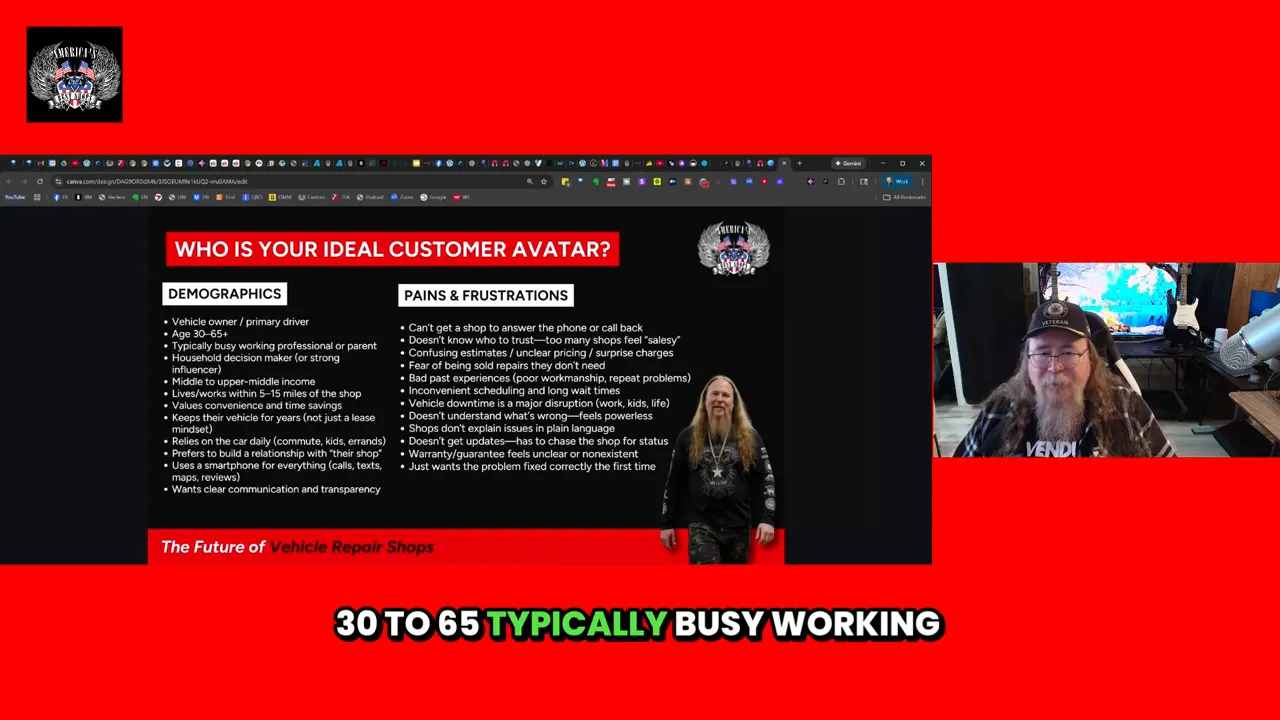
When you write website copy, ads, videos, and mailers, speak directly to that avatar in plain language. Use real photos of your team, short videos explaining what to expect, and FAQs addressing the questions your avatar would ask.
Lead generation and lead nurturing: both matter
Generating leads is only half the battle. Lead nurturing multiplies the value of every prospect you capture. Many shops with weak follow-up see their appointment rates stay abysmally low despite steady traffic — a reason repair shops won’t survive without a proper nurture process.
Best practices:
- Immediate response to missed calls and web forms via AI or human follow-up.
- Multi-channel touches: SMS, email, phone, and sometimes direct mail or targeted social ads.
- Automated reminders and appointment confirmations to reduce no-shows.
- Reactivation campaigns for overdue maintenance and previously declined work.
Human in the loop: automation plus real relationships
Automation can handle a lot: immediate replies, FAQs, routing, and scheduling. But humans still matter in the moments that build trust. The strongest shops use automation to capture and qualify leads quickly, then bring in a real service advisor to close the estimate with empathy and clarity.
In short, automation is a force multiplier — not a replacement for honest human interactions.
Three high-impact shifts to implement now
If you only make three strategic shifts this quarter, these are the ones that move the needle fastest and address why repair shops won’t survive if no action is taken:
- Make your website a conversion hub — mobile-first, FAQ-rich, fast, and integrated with chat, booking, and reviews.
- Fix the inquiry leak — implement immediate response automation and a 5–7 touch nurture sequence so leads book and show up.
- Build omniresence — consistent brand signals across Google Maps, directories, social, video, and paid channels so AI and humans can recommend you.
Commit to one of these shifts first, execute well, measure results, and then add the next. Most businesses fail because they do not execute consistently — not because their ideas were bad.
Common objections and how prepared owners respond
Objection: “This sounds expensive and complicated.”
Response: Start small and measurable. Pick one KPI to improve — like reducing missed-call percentage — and invest in the cheapest high-return fix: call handling and immediate follow-up automation.
Objection: “I don’t understand the tech.”
Response: You don’t need to become the tech expert. Partner with a provider who treats your website as a hub, integrates automation, and trains your staff on the human elements that matter.
Objection: “I don’t want to spend on marketing.”
Response: Marketing is not optional. It is your business. Low visibility equals fewer jobs. If you want to be among the few for whom the phrase repair shops won’t survive does not apply, you must treat marketing as a core business function with goals and accountability.
A simple 90-day execution plan
Use this as a quick roadmap to move from strategy to action.
- Week 1–2: Audit — Review website, GBP, reviews, and missed-call rate. Set one measurable KPI.
- Week 3–4: Quick wins — Fix click-to-call, add a booking link, put a basic chatbot or live chat in place, and ensure your NAP (name, address, phone) is consistent across major listings.
- Month 2: Automation — Implement missed call handling, instant replies, and a 5–7 touch nurture sequence for leads.
- Month 3: Scale — Build out FAQ-rich service pages, add video testimonials, run a small local ad campaign, and measure improvements in inquiry-to-book rate and revenue.
Measure the right things
Too many shops track vanity metrics that do not move revenue. Track these instead:
- Inbound inquiries per month
- Inquiry-to-book conversion rate
- Missed-call percentage
- Average job value
- Show-rate for booked appointments
- Revenue per month
When these KPIs are baseline tracked and improved, the business becomes predictable and scalable. The shops that do this are the shops that prove the claim repair shops won’t survive is false for them.
Content and video: the trust multiplier
Video and helpful content are not optional. Video builds familiarity faster than text, and FAQs give AI the answers it needs to recommend your shop. Short shop tours, technician intros, and before/after clips work especially well.
Use short videos on Google Business Profile posts, your website, and social channels. Put short how-to or myth-busting pieces that answer common customer questions. The goal is to reduce fear and increase confidence so visitors call or book.
Checklist: actions to take this week
- Check your missed-call rate and route missed calls to an automated responder.
- Add prominent click-to-call to your homepage and service pages.
- Publish 5 FAQs for your top services and add them to both the website and GBP posts.
- Collect and showcase 3 recent reviews with names and photos where possible.
- Write down your 2026 revenue goal and translate it into jobs per month and inquiries required.
How immediate is “immediate” when responding to a lead?
Respond within the first one to two minutes whenever possible. Leads that are contacted within minutes convert at a dramatically higher rate. Use automation and AI reception to capture the moment, then route to a human if needed.
Do I need expensive tools to stop the missed-call problem?
No. There are affordable AI reception and call routing tools that can capture leads, send an instant scheduling link, or route hot leads to your service advisor. Start with a basic instant-response solution and iterate.
Is SEO still important if people use voice and AI assistants?
Yes. SEO now includes creating AI-readable content: clear FAQs, service pages, and structured business information. That content helps AI assistants recommend your shop and provides the context needed for voice results.
How many follow-up touches are necessary before a prospect books?
On average, a quality customer may require five to seven touches across email, text, calls, or social before they book. Automating this sequence makes it realistic and cost-effective.
Can smaller independent shops compete with franchises and aggregators?
Yes. Independent shops can win by focusing on niche positioning, superior communication, convenience, and building trust through local reviews, warranties, and genuine team stories. Omniresence and conversion optimization level the playing field.
Final note: commit to one big shift
Most repair shops won’t survive if they keep treating marketing as a side activity or rely on outdated tactics. The shops that survive and thrive treat marketing as a measurable system: clear goals, a modern hub, fast follow-up, and consistent omniresence.
Pick one high-impact change today — fix the missed-call leak, modernize your website hub, or launch a simple nurture automation. Execute it well, measure the KPIs, and expand from there. The difference between becoming one of the shops that won’t survive and one that grows is action and consistency.
When you treat marketing as a core business function, the phrase repair shops won’t survive no longer applies to you.

Brad Killgore is a Best Selling Author, Speaker, Military Veteran, and Strategic Marketing Expert with over 18 years of experience in the industry. Brad loves to spend time with his family and 3 grandchildren. He is an avid traveler who previously lived full-time with his wife in their luxury RV for 3 years. He has worked on some of the biggest concert stages in the world and met some of the most famous Rock Stars on the planet. Brad is a car and motorcycle enthusiast who has attended thousands of concerts over the last 45 years. Brad has been featured on top media outlets for his outstanding marketing results for America’s Best Shops. Brad is a Trailblazer in the world of AI strategy and automation.